Posts

How to Use Virtual Reality in Laboratories of Schools and Colleges

Image
In recent years, technology has advanced at a brisk pace, which has led to the adoption of powerful technologies like Virtual Reality (VR) and Augmented Reality (AR) in many industries. Virtual reality technology has the potential to revolutionize the way we teach and learn as it presents an immersive environment to explore things outside a traditional classroom and helps students understand complex topics with relative ease in a short time. A study  by the National Training Laboratory shows that retention rates in conventional learning methods were at 10 percent, while VR-based learning had a retention rate of 75 percent. So, it is time we took the educational experience up a notch by incorporating VR for schools and colleges. Here, we make a case for using VR in labs, illustrating how it is being used and the benefits of using VR labs in academies. In this blog, What Is a Virtual Reality Lab? Virtual vs. Physical Labs Ideas to Use VR Labs for Schools and Colleges Benefits of VR L...

10 Ways Virtual Reality Is Already Being Used in Education

Image
Just a decade ago, Virtual Reality (VR) was a fancy thing in Hollywood sci-fi movies for most of us. However, swift technological advancements in the past few years led to the rise of powerful technologies like VR in the mainstream. Although VR entered the scene as a user experience enhancement tool in the gaming industry, it has quickly made its mark in other sectors due to its potential to deliver "life-like" experiences. Education is one of the fields that benefit immensely by incorporating VR technology. Virtual reality in education makes learning simple, fun, and practical by providing an immersive learning experience. In this blog, we will take a look at 10 current use cases of VR in education. 1. Virtual Field Trips Virtual field trips are a widespread application of VR technology in the education industry. It enables students to explore different locations on earth and 'teleports' them to places that may be infeasible to visit in real life due to various ...

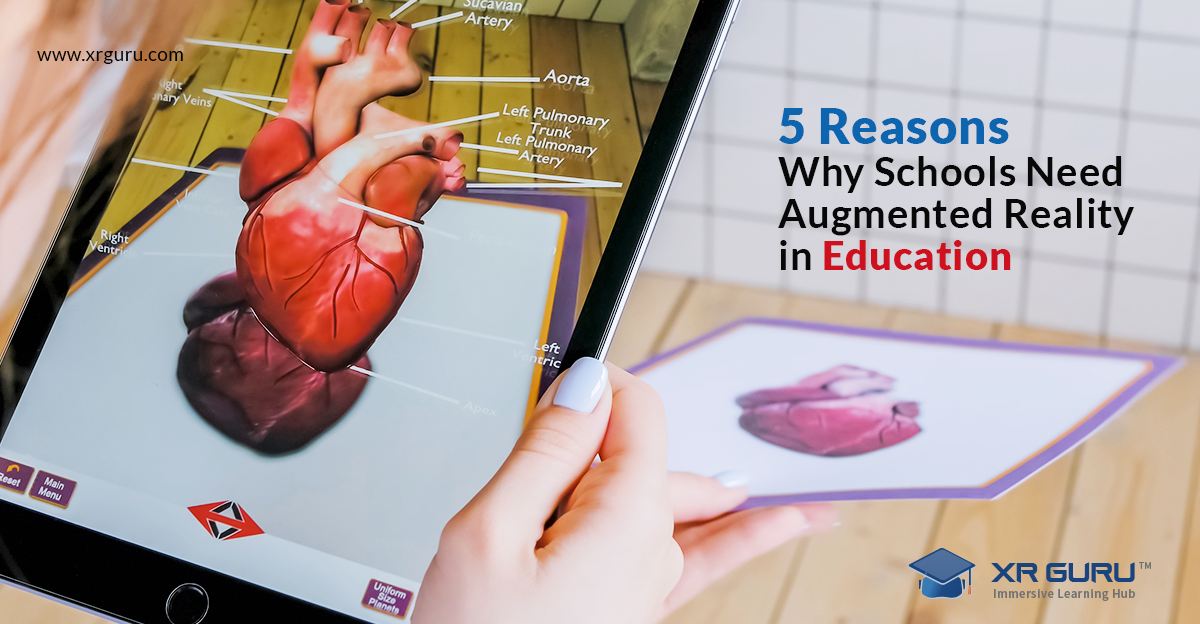
5 Reasons Why Schools Need Augmented Reality in Education

Image
Technologies like Augmented Reality (AR) and Virtual Reality (VR) have seen immense growth in the last decade. Gone are the days when AR was seen as a mere tool to enhance the entertainment industry. Augmented reality is making its mark in several industries, including education. Amid the COVID-19 pandemic, tech-based learning has turned heads, and more educators have started to migrate from traditional learning methods. Augmented reality is a leading EdTech trend, and according to ABI Research , the value of AR for education is estimated to reach US$5.3 billion by 2023. In this article, we give five reasons that highlight how AR can transform school education. 1. Potential of Visualized Learning When it comes to education, the power of visual content cannot be downplayed. AR-based education uses 3D-image models and digital projections, which help students understand complex concepts with relative ease. For example, instead of looking at an image in a textbook, students can see a ...

What Augmented Reality Training Is and How to Leverage It

Image
Technology has seen aggressive development in the past decade, and it is safe to say that cutting-edge technologies like Augmented Reality (AR) and Virtual Reality (VR) are en route to becoming invaluable in our day-to-day lives. Augmented reality technology is mobile-friendly, and the number of smartphone users has increased rapidly in recent years. In fact, according to Statista , the number of mobile AR users is expected to reach over 800 million and is anticipated to grow to 1.73 billion by 2024. Augmented Reality infiltrated the mainstream thanks to games like Pokémon Go and social media apps like Snapchat . But contrary to conventional wisdom, AR is not limited to the entertainment industry. AR is doing wonders in diverse fields ranging from entertainment to retail, and it is time we started using AR for training. In this blog post, we will explore: What is AR Training? How is AR Used in Training? How to Adopt Augmented Reality for Corporate Training? Advantages of AR-Powered T...

Guide on Getting Started with VR in Your Classroom

Image
Virtual Reality (VR) is not a fancy piece of tech you only see in movies anymore. In recent years, VR came into prominence by entering the entertainment and gaming industry to enhance user experience. However, VR has gradually left its mark in other fields ranging from Retail to Education . According to recent statistics , the global VR market is projected to increase from less than $5 billion USD in 2021 to more than $12 billion USD by 2024. Considering these stats, it is safe to say that the trend of adopting VR tech in all industries is increasing, and in all likelihood, VR is set to be a part of our day-to-day lives. Obviously, some industries benefit more from VR than others, and education is one of them. Gen-Z is exposed to more advanced technologies and are becoming tech-savvy by the day, so they would love to see technologies like VR take over traditional methods of learning. Curious about using VR in the classroom? Here is a guide on how you can start implementing Virtual Rea...

Top 5 Challenges in Implementing VR in Schools

Image
Virtual Reality (VR) is one of the fastest-growing technologies, and is widely used in many industries, like entertainment, training, travel, manufacturing, retail, and others. Besides having a positive impact in other fields, VR plays a significant role in transforming education. Virtual reality technology offers an immersive learning environment that enhances the learning experience. Virtual reality empowers teachers to explain the subject matter visually with interactive 3D models and helps students understand complex concepts clearly. Virtual reality promotes hands-on, practical learning, thereby improving the student's retention power. While incorporating VR in schools has a plethora of benefits, it does not come without any challenges. In this article, we highlight some key challenges in implementing VR in schools. 1. Lack of Awareness Many educational institutions are not aware of emerging EdTech developments, and as a result, they do not show the intent to adopt leadin...

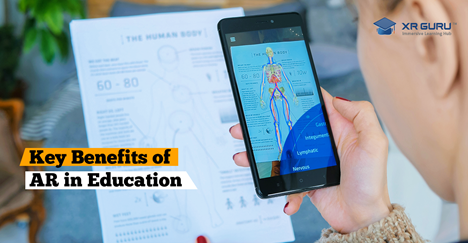
Key Benefits of AR in Education

Image
Only a decade ago, using technologies like Augmented Reality (AR) was expensive, and the market was devoid. However, many of us got to experience AR technology first-hand, thanks to games like Pokémon Go and social media apps like Snapchat . But the potential of AR is not confined to one field. AR technology can transform many industries, including education. Amidst the COVID-19 pandemic, digitized education has taken over traditional learning, and more institutions have started to explore AR solutions to enhance the learning experience, making it fun and engaging. The global market for AR in education is growing and is projected to reach $41.8 billion by 2027, according to a report issued by researchandmarkets.com In this article, we highlight some of the key benefits of incorporating AR in education. 1. Immersive Learning Environment Retaining the learner’s attention is one of the key hurdles in conventional education. However, interactive, gamified AR educational content can ...